|
Home
Calendar
soon !!
Haunted
Hotel
What We Do
Pics of FUN !
Pics from
the PAST
Officers
History of
US Jaycees
History Of Huntington
Jaycees
Huntington Presidents
Members
Only
____________
| |
U.S.
Jaycees History 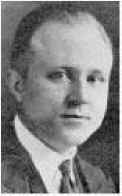
Henry "Hy" Giessenbier, Jr. (1892-1935)
wanted to develop the business skills and the reputation of young men. This
approach was a bit unusual, as his era was one in which most young men were out
of school and working by the age of 15, and their first jobs were the jobs they
died in. If they were lucky, they might work their way into an executive
position by the time they were in their 40s. But Hy knew that twelve signers of
the Declaration of Independence were under 35; Thomas Jefferson was only 33 when
he wrote the original draft of the document!
So Hy decided to do something positive for the young
men of St. Louis. On October 13, 1915, at the Mission Inn in St. Louis,
Missouri, Hy gathered 32 young men agreed to form the Young Men's Progressive
Civic Association (YMPCA), developing their skills as leaders by tackling
difficult civic problems. Today we recognize October 13 as "Mission
Day" for chapters and observe the occasion with membership drives and
special meetings.
Giessenbier wanted young men to make an impression
early in life, so development of business and leadership skills was offered to
members of the early movement. Those skills and other benefits are still offered
today.
In 1916, the YMPCA changed its name to Junior
Citizens at the request of Clarence H. "Daddy" Howard, a St. Louis
industrialist and early benefactor of the Junior Chamber organization. The
Junior Citizens affiliated with the St. Louis Chamber of Commerce in 1918.
Following the first World War, a plan to form a national coalition of young
men's groups was widely circulated.
The "St. Louis Plan" resulted in a
gathering of 29 organizations from around the country in January of 1920. This
caucus on January 21 and 22 is the official date of birth for The United States
Junior Chamber of Commerce. Today, the commemoration of the caucus falls within
Junior Chamber Week, which begins the third Sunday of every January.
In June of 1920, when the first Annual Meeting was
held, Hy was elected president. Little did he realize how much effect the
organization he started would have in America and around the world. He died on
November 7, 1935.
In the 1920s, the Junior Chamber of Commerce began
the first national program, "Get Out The Vote", designed to encourage
citizens to participate in their government. Today governmental involvement
remains a national concern.
One of the Junior Chamber's significant
accomplishments was its role in the development of aviation in America. Many
local organizations helped construct and develop airport facilities. The efforts
of Junior Chamber chapters also resulted in the establishment of regular air
mail service.
In the 1930s, the organization grew to nearly 700
chapters. A national publication, ACTION, began. Adoption of a new constitution,
design of the official seal of the Junior Chamber and the establishment of the
Distinguished Service Awards (DSA) program also took place. The U.S. Junior
Chamber established the Ten Outstanding Young Men recognition program, now known
as Ten Outstanding Young Americans. They worked hard to reduce urban traffic
accidents in the '30s through the "Safety With Light" program.
More significant, though, was the role Junior
Chamber groups had in conserving America's natural resources. Cooperation
between groups in Canada and the U.S. resulted in the Quetico Provincial Park in
Canada and the Superior National Forest in northern Minnesota. Junior Chamber
groups also worked with Garden Clubs, the Farm Bureau, Isaac Walton League and
other groups to form the National Wildlife Federation. The Federation represents
all conservation groups. Its purpose is to ensure adequate legislation for
conserving our national resources at the state and national level.
Even though most of its members would hear the call
of duty in the '40s, the Junior Chamber of Commerce went on record in favor of
compulsory military training at the organization's 1940 Annual Meeting in
Washington, D.C. While more than 85 percent of the membership was fighting in
World War II, local groups were conducting scrap drives, selling war bonds and
assisting USO chapters to help in the war effort.
Despite the hostilities in other countries, the true
spirit of the Junior Chamber prevailed. The organization was established in
other countries in 1944 during a meeting in Mexico City, Mexico. Today, more
than 100 countries are part of the organization known as Junior Chamber
International (JCI).
A young Junior Chamber member from Columbus, Ohio,
attended the first convention (in Milwaukee) after the war. He was so inspired
he wrote the words of what is known today as the Junior Chamber of Commerce
Creed. C. William "Bill" Brownfield realized the importance of the
Junior Chamber of Commerce movement, which he then incorporated into a statement
of belief.
A Junior Chamber project that bridged the 1940s and
1950s was a government reorganization. President Truman had asked former
President Hoover to review the operation of government Hoover's recommendations
met with opposition from government officials, veterans and other groups. The
Junior Chamber backed the recommendations because it felt the changes would
benefit all Americans. The organization's campaign on behalf of the Hoover
Report enabled more than 80 percent of the recommendations to be enacted.
The 1950s saw the outbreak of another war and saw
the Junior Chamber of Commerce working harder to preserve the freedoms of
America. President Dwight D. Eisenhower became the first President to address an
Annual Meeting of the Junior Chamber in 1953. In his speech, the president said,
"Yours is one of the nation's most distinguished and enterprising
organizations. You are young and responsible people, with impressive careers and
achievements already recorded to your credit. . . because you are both young and
responsible, you know what is your greatest responsibility of all tomorrow the
whole future of freedom."
The Junior Chamber worked to obtain statehood for
the territory of Alaska during the '50s. Statehood for Hawaii was achieved
shortly afterwards. Junior Chamber members were also concerned about the youth
of America and so began the "Junior Citizens Crusade."
The Crusade was designed to curb and prevent
delinquency by offering constructive activities for youths, such as the Safe
Driving Roadeo and other programs. The Junior Chamber worked to rehabilitate
youth who strayed by establishing a uniform juvenile court system and by backing
the "Big Brother" program.
In the 1960s, the Junior Chamber enlightened the
country about mental health and mental retardation. Their most significant
activity of the '60s was the organization's efforts to create a Uniform Vehicle
Code. Chapters surveyed local problems and worked to promote enactment of
uniform laws by all states and to adopt similar municipal codes.
In the 1970s, the organization helped create the
National Center for Voluntary Action, but also played a vital role in other
areas of public concern. An alcohol abuse program, "Operation
Threshold," contributed to an understanding of the problems associated with
alcohol consumption. "Operation Red Ball" saw the Junior Chamber
distribute more than 5 million fire protection stickers in 1972 alone as part of
a program to aid fire departments in locating children and invalids during
household fires.
During the 1980s, the organization faced many
turning points. The membership voted in 1984 to expand their membership
requirements by admitting women, ages 18-35 as full voting members. In 1987,
another vote revised The U.S. Junior Chamber of Commerce age limits to 21
through 39, expanding Junior Chamber opportunities to even more people. In the
'80s, the Junior Chamber continued to support America's Olympic Athletes; raise
funds to fight muscledestroying diseases; be concerned with the conduct of
government in this country; further improve communities by developing parks and
playgrounds that are safe to use, becoming involved with efforts to house the
homeless and feed the hungry, while developing their own personal skills as
leaders; and extend the hand of the Junior Chamber to other communities to help
more young people than ever before create a lasting effect.
Opportunities in the 1990s are endless. In the
beginning of the decade, the Junior Chamber was involved in Project Home Front
helping families touched by Desert Storm and the war in the Gulf. The Junior
Chamber also took advantage of the development of the movement in the Eastern
Bloc countries, with the promotion of the Junior Chamber to a united Germany and
in the Soviet Union. Junior Chamber members will continue to determine the
history of this decade by what they do in the worldwide community.
In 1990, the name of the organization was officially
changed back to "The U.S. Junior Chamber of Commerce". In 1992,
national Wake Up America program urged communities to get involved in politics
by coordinating voter registration campaigns, hosting debates, and embracing
pertinent community issues. Junior Chamber members responded to devastating
hurricanes in the southeast with national support. In 1993, GreenWorks!
environmental education and community action programs were adopted by the USJCC.
Jaycees Against Youth Smoking (JAYS) was adopted as a national program. In 1994,
the Junior Chamber Mission Inn Foundation program was launched. This program is
ongoing and will build a nationwide network of care facilities for children and
adolesents affected by HIV/AIDS. In 1995, The Jaycee Alliance was formed as a
non-partisan, educational grassroots governmental advocacy organization to give
Young American Adults a voice in government. The organization recognized the
upcoming boom on the Internet early on, and with the intent of "Connecting
Jaycees Across America", launched it's own website in 1995. The address was
changed to www.usjaycees.org in 1996. Also in 1996, the Jaycees Wake Up America
Tour began a journey through the 48 contiguous states promoting programs and
membership. Social Security Reform Town Hall Meetings were also started around
the nation.
Changes in the Junior Chamber will continue. It is
what makes the Junior Chamber unique. Changes come through the new ideas
proposed by the membership. Each young adult who is a member of this
organization is given that chance to grow and develop. For valuable insight on
the history, programs and people of the Junior Chamber, read A Legacy of
Leadership: The U.S. Junior Chamber of Commerce Celebrates 75 Years. The 1995
book relates the inspiring stories and photos of how our movement has changed
America. On Being A Jaycee is a collection of statements by past Jaycees on what
the organization has meant to them. This Junior Chamber history book can be
ordered from The U.S. Junior Chamber of Commerce Products department..
|